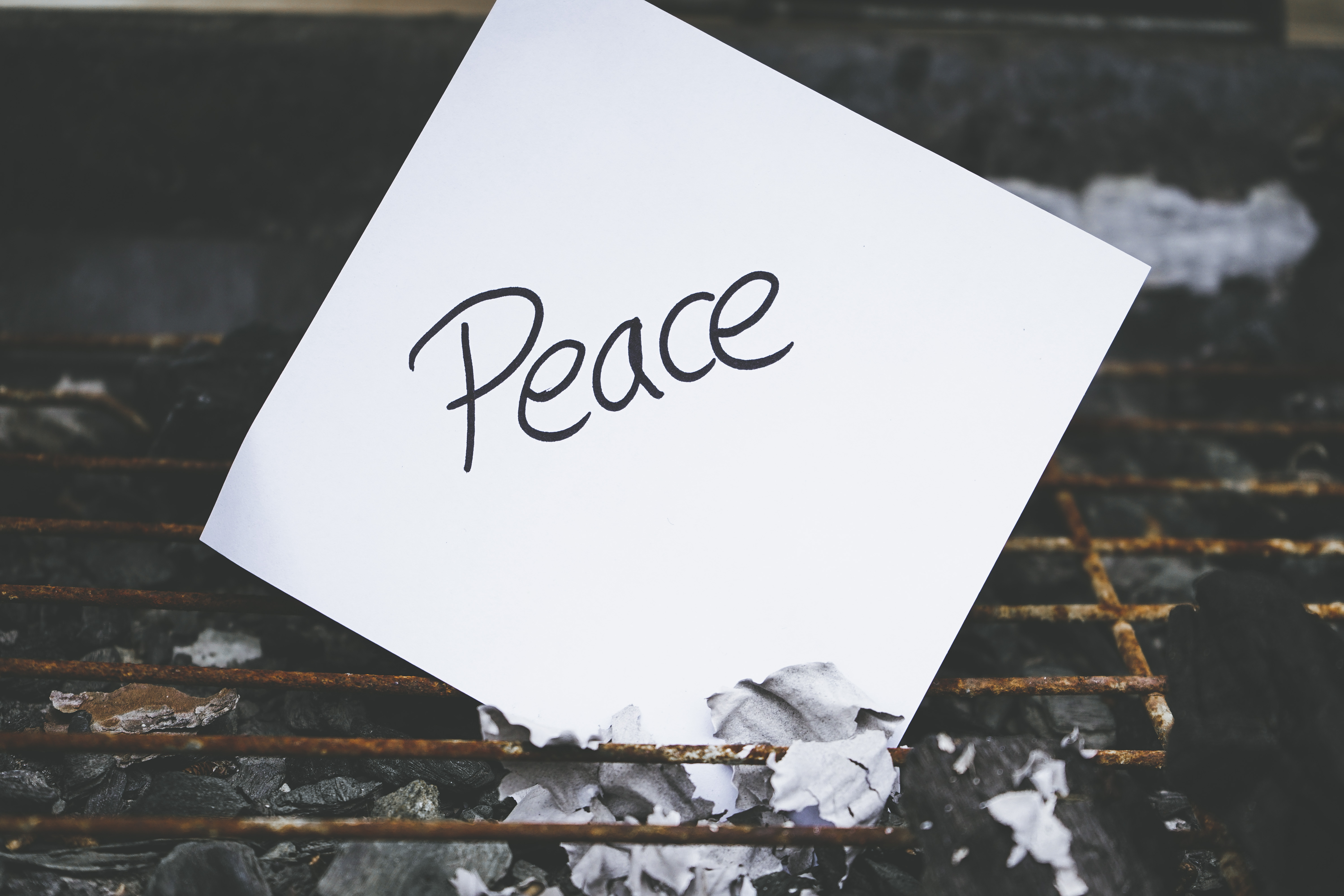
Why Peace Can Feel So Uncomfortable
When Nothing Is Wrong, But Something Still Feels Strange
Imagine finally reaching the weekend you’ve been looking forward to.
There are no urgent emails waiting for a response, no meeting you’re preparing for and nothing immediately demanding your attention. For the first time in what feels like weeks, you genuinely have nowhere you need to be.
It should feel good... and for a while, maybe it does.
Then something starts happening. You pick up your phone without really knowing why. Your mind wanders towards work. You remember something you could be doing, or start thinking about Monday, the next competition, the business, your training or whatever happens to occupy most of your world.
Before long, the space you’d spent all week wanting begins to feel uncomfortable.
I’ve always found this interesting because we talk so much about people needing to slow down, yet we rarely talk about what happens when they actually do.
For someone who had spent years operating under pressure, peace wasn’t necessarily experienced as peace straight away. It can feel unfamiliar, almost as though something is missing. The mind has become so accustomed to having something to solve, prepare for or respond to that the absence of those demands can create its own kind of discomfort.
That’s particularly relevant for high performers because the characteristics that help someone succeed don’t automatically disappear when the working day ends.
An entrepreneur doesn’t stop thinking like an entrepreneur when they leave the office. An athlete’s competitive mind doesn’t suddenly switch off on a recovery day. A CEO can be sitting with their family while part of their attention remains with the decisions waiting for them tomorrow, just as a poker player can leave the table while continuing to replay hands long after the cards have been put away.
Sometimes the body has stopped... The Mind hasn’t.
When Being Busy Becomes Familiar
I don’t think most people consciously decide that they want to live under pressure.
This develops over time...
A period of intense work becomes normal. The business grows and brings greater responsibility. Competition becomes more serious. Expectations increase, other people begin relying on you and there is always another problem that deserves attention.
Eventually, being busy stops feeling like something you’re doing and starts feeling like the way life works.
That’s where things become interesting.
When we’re accustomed to operating at a certain level of intensity, slowing down can create a space we’re no longer used to occupying. There is nothing necessarily wrong with that space, but it feels different enough for the mind to want to fill it.
So we check the phone.
We create another goal.
We think about something that needs improving.
We convince ourselves we’re getting ahead.
For some people, even rest becomes something to optimise. A day off needs to be productive. A holiday needs an itinerary. Exercise has to produce a result. Meditation becomes another habit to complete rather than somewhere to simply be.
I don’t think this happens because high performers don’t value rest. Many desperately want more of it.
The difficulty is that wanting peace and knowing how to experience peace are two very different things.
The Identity Behind the Busyness
There is another layer to this that I think matters.
For many high performers, achievement doesn’t only provide results. Over time, it can also provide a sense of identity.
Being the founder who solves the problem, the athlete who keeps pushing, the leader people turn to or the competitor who is always preparing gives us a role we understand. We know how to operate there. We know what’s expected of us and there is often an immediate sense of purpose attached to what we’re doing.
Remove the pressure for a moment and a different question can appear.
Who am I when nobody needs anything from me?
That’s a very different question from asking whether we need more rest.
I’ve worked with people who are incredibly comfortable carrying responsibility but surprisingly uncomfortable having none. They can make difficult decisions, perform under enormous pressure and support everyone around them, yet give them an afternoon with nothing expected of them and their mind immediately starts searching for something to do.
I don’t see that as a flaw... I see it as something worth becoming aware of.
Because if our sense of value has gradually become connected to being productive, useful or successful, peace can unintentionally remove the very things we’ve learned to use as evidence that we’re doing enough.
... Maybe that’s why slowing down can sometimes feel harder than speeding up.
We know who we are when we’re performing... But we’re not always as certain who we are when we’re simply living.
Research Insight
There is actually a useful body of research around what psychologists call psychological detachment: our ability to mentally disconnect from work during the time we’re no longer physically doing it.
One large meta-analysis brought together 86 publications involving more than 38,000 employees. The researchers found that greater psychological detachment from work was associated with less exhaustion and fatigue, better sleep, greater life satisfaction and improved overall wellbeing. Interestingly, people with heavier investment in their work also tended to find detachment more difficult.
I think that last point is particularly relevant to high performers.
The more something matters to us, the harder it can be to leave it alone. When you’ve spent years developing the ability to focus intensely on a business, a sporting career, leadership or competition, you can’t necessarily expect that same mind to switch itself off simply because you’ve closed the laptop or walked away from the table.
Maybe recovery, then, isn’t just about having more time off... It’s about learning how to be mentally present in the time we’ve already got.
When Rest Starts to Feel Like You’re Falling Behind
I think there’s another reason high performers can struggle with peace and it’s one I’ve seen many times over the years.
Rest can feel dangerously close to falling behind.
When you’re surrounded by people who are constantly building, training, competing and improving, taking your foot off the gas can create an uncomfortable feeling that someone else is getting ahead while you’re standing still. You may know logically that recovery matters, but emotionally it can still feel as though you’re wasting valuable time.
Athletes probably understand this better than most. Recovery is an essential part of performance, yet there can still be a temptation to believe that another session must be better than doing nothing. Entrepreneurs can experience something similar when they watch competitors launching, growing or posting online while they’re trying to take some time away. Elite competitors may know they need space after an intense period but another tournament, opportunity or challenge is never far away.
The problem is that rest and progress aren’t opposites.
Sometimes stepping away is part of what allows us to return with greater clarity, energy and perspective. The difficulty is accepting that not every part of growth looks productive from the outside.
For someone who has spent years measuring progress through visible action, that’s a very different way of thinking.
"Sometimes peace doesn’t feel peaceful at first. It feels like the absence of everything we’ve learned to depend on."
What Two Lives Theory® Has Taught Me About Slowing Down
One of the ideas that continues to shape Two Lives Theory® is that the qualities that helped us build one chapter of our life aren’t always the same qualities we’ll need for the next.
There may have been a period when pushing harder was exactly what you needed. You had something to prove to yourself, a business to build, a level to reach or an opportunity you weren’t prepared to waste. That intensity may have been responsible for some of the greatest achievements of your life.
But there can also come a point where the question changes.
Instead of asking, "How much more can I do?", perhaps the question becomes, "How do I want to experience the life I’ve created?"
That doesn’t mean becoming less ambitious.
I think that’s an important distinction.
There is sometimes an assumption that balance means losing your edge, as though becoming more present somehow requires us to stop caring about success. I’ve never seen it that way. You can still want to win. You can still build something extraordinary. You can still have goals that stretch you beyond what you currently believe is possible.
The difference is whether your entire sense of self has to remain in a constant state of pursuit in order for you to feel okay.
That is a very different relationship with ambition.
Learning to Experience the Space
Maybe the answer isn’t to suddenly become brilliant at relaxing.
For someone who has spent a few years operating at a high level, telling them to "just switch off" probably isn’t particularly useful. The mind doesn’t work like a light switch and habits that have developed over years rarely disappear because we’ve booked a holiday.
I think awareness is a better place to begin.
Notice what happens when you have space.
Do you immediately reach for your phone? Does your mind start creating problems that need solving? Do you feel guilty when you’re doing something purely because you enjoy it? Do you find yourself turning even your downtime into another opportunity to achieve something?
Those aren’t questions designed to judge the way you live. They’re simply an opportunity to understand it.
Because sometimes we don’t realise how dependent we’ve become on stimulation until the stimulation disappears... and when we begin noticing that, we can start creating a different relationship with the space rather than automatically filling it.
A Moment to Reflect
Think about the last time you genuinely had nothing you needed to do.
Not a recovery session you had scheduled. Not meditation because it was part of your morning routine. Not a holiday where you were still checking work.
Just Space.
How did it actually feel?
If your immediate reaction was restlessness, guilt or the urge to find something productive, it may be worth asking yourself:
- What does being busy give me beyond productivity?
- What do I believe might happen if I slow down?
- Can I feel valuable on a day when I haven’t achieved anything?
The answers may tell you more about your relationship with high performance than another productivity strategy ever could.
My Final Thoughts
I don’t think peace is something we find once life finally becomes calm.
For many people, especially those who have spent years performing at a high level, I think peace is something we have to learn how to experience.
That might mean becoming comfortable with an afternoon that produces nothing measurable. It may mean spending time with someone you love without part of your mind being somewhere else. It may mean recognising that your value doesn’t increase because you’ve answered another email, completed another training session or added another achievement to the list.
None of this requires you to become less driven.
If anything, I think it allows ambition to take its rightful place in your life rather than becoming your entire life.
There will always be another challenge available to us. Another target, another business opportunity, another competition or another version of ourselves we could work towards becoming. That’s part of what makes life exciting.
But there also has to be somewhere within all of that where we can experience what we’ve already created.
Maybe that’s why peace can feel uncomfortable at first.
We’re not only learning how to slow down... we’re learning that we’re still enough when we do.
One Last Thing...
How did this feel for you?
If you recognised yourself somewhere in this Journal, it may be worth exploring what your relationship with pressure, achievement and slowing down has become.
If you’d like to explore this further and understand what your next chapter could look like without losing the ambition that helped you get here, you can {Request Mentorship}.
I look forward to connecting.
Speak soon,
Basim
