
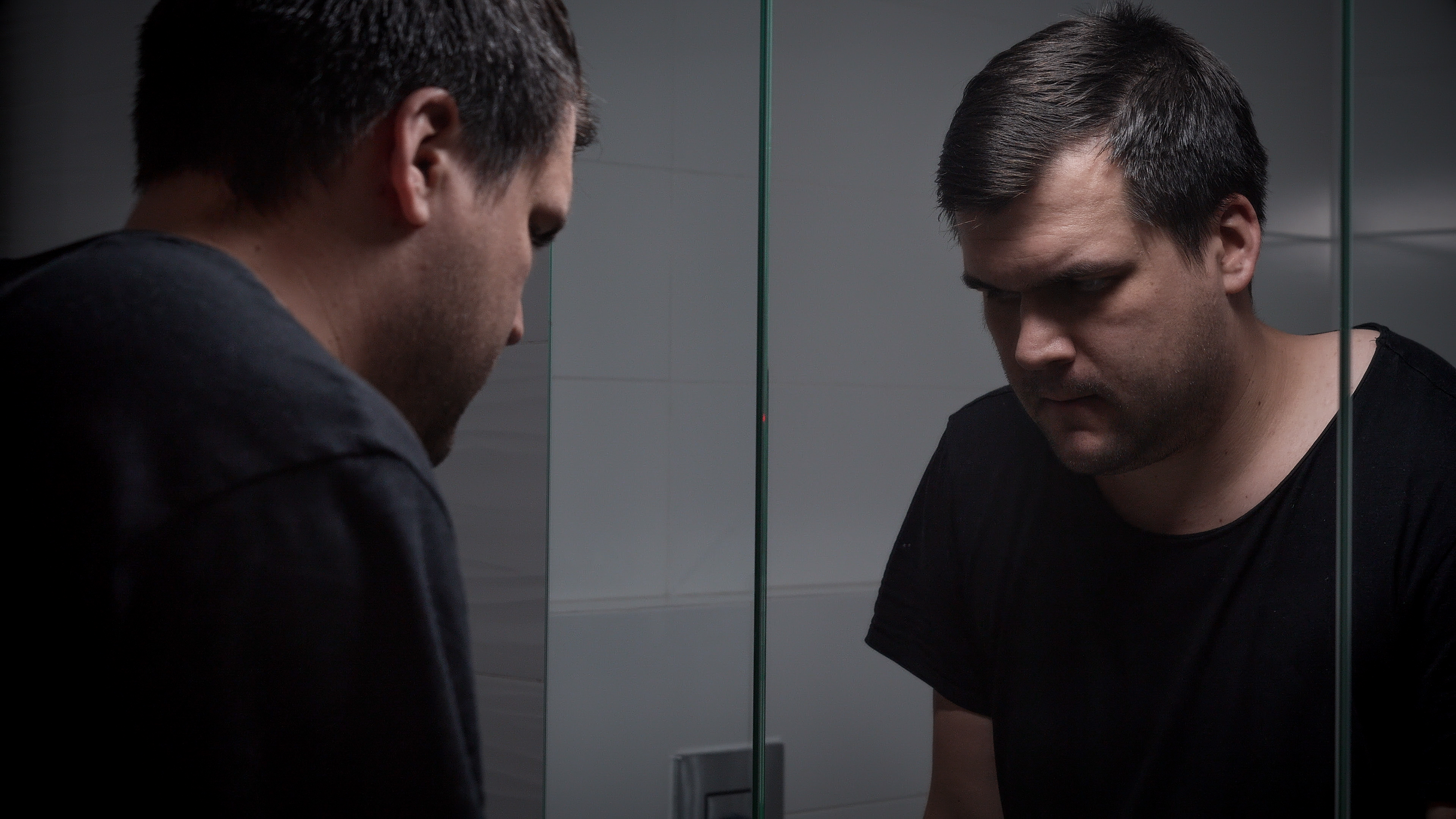
WHY ARE WE SO HARD ON OURSELVES?
The Way We Speak to Ourselves
Most of us would never speak to somebody we care about in the same way we sometimes speak to ourselves.
A friend makes a mistake and we remind them that they're human. Someone we love has a difficult week and we tell them not to be so hard on themselves. We can see the bigger picture when we're looking at somebody else's life.
Then it happens to us.
We make the mistake, miss the opportunity, say the wrong thing or don't perform the way we expected and suddenly the language changes. Instead of seeing one difficult moment, we start judging ourselves through it.
“I should have known better.”
“Why am I still doing this?”
“I need to get myself together.”
“I'm better than this.”
Some of that can sound like accountability, but sometimes it isn't accountability at all. It's criticism wearing the clothes of discipline.
When Being Hard on Yourself Feels Productive
I see this a lot with high performers because being demanding of yourself can genuinely produce results.
An athlete reviews what went wrong because they want to improve. An entrepreneur looks at a failed decision so they don't repeat it. A leader holds themselves to a high standard because other people depend on them.
There is nothing wrong with any of that.
The problem starts when the review of what happened becomes a judgement of who we are.
There is a difference between saying, “I didn't handle that well” and “I'm useless at this.” One looks at behaviour and gives us something to work with. The other turns one moment into something much bigger.
And this isn't only a high-performance problem.
People do it with relationships, parenting, appearance, money and everyday decisions. We can carry one mistake far longer than anyone else involved has even thought about it.
“You don't have to hate where you are to become better.”
Where Does That Inner Voice Come From?
Through coaching and NLP, I'm interested in the language people use internally because we don't always realise how repetitive some of our thoughts have become.
Sometimes that voice sounds like pressure we experienced growing up. Sometimes it comes from being compared with other people. It can develop through sport, education, relationships or environments where mistakes felt like something we needed to avoid.
And sometimes it's simply a pattern we've reinforced ourselves over time.
If being hard on yourself once pushed you to succeed, your mind can learn that pressure works.
So the next time something goes wrong, it adds more pressure.
Then more again.
Eventually you can reach a point where you're achieving a lot but almost nothing feels good enough for very long.
That isn't because you've lost ambition.
Sometimes the standard has just become impossible to satisfy.
Research Insight: Being Kinder to Yourself Doesn't Mean Losing Your Drive
One fear people sometimes have is that if they stop being so hard on themselves, they'll become lazy or lose their edge.
Research doesn't really support that idea.
In four experiments, researchers Juliana Breines and Serena Chen looked at what happened when people responded to personal failure with more self-compassion. They found that participants weren't less motivated to improve. In several areas, including personal weaknesses, mistakes and academic performance, they showed greater motivation to make changes and improve.
More recent research has continued to look at the role of self-criticism. A 2026 systematic review and meta-analysis brought together 57 randomised controlled trials involving 4,877 adults and found that reductions in self-criticism were an important part of how compassion-based approaches improved psychological symptoms.
I don't think that means we need to become soft with ourselves.
It means we can be honest without making ourselves the enemy.
What Self-Criticism Can Sound Like
Sometimes the pattern becomes easier to notice when we hear the language:
-
“If I'm not hard on myself, I'll lose my standards.”
-
“I shouldn't still be struggling with this.”
-
“Everyone else seems to handle this better than me.”
-
“Once I get this right, then I'll feel better about myself.”
The thought might sound motivating at first, but underneath it there can be a message that says who you are right now isn't enough.
That's a difficult place to keep growing from.
Accountability Without Attacking Yourself
I don't think growth means ignoring our mistakes or telling ourselves everything is fine when it isn't.
Sometimes we do need to take responsibility.
We need to apologise, change our behaviour, work harder or admit that something isn't working.
But accountability can be clear without being cruel.
Instead of asking “What's wrong with me?”, we can ask “What happened here and what do I need to understand?”
Instead of “Why do I always do this?”, we can ask “What pattern am I noticing?”
That change might look small, but the second question gives us somewhere to go.
The first one often just gives us somewhere to stay stuck.
Two Lives Theory: The Pressure That Built You Doesn't Have to Keep Leading You
This connects strongly with Two Lives Theory because some people built an incredible first chapter through pressure.
- They pushed themselves.
- They expected more.
- They refused to settle.
And maybe that pressure helped create something they're genuinely proud of. But what helps us build one stage of life doesn't always need to control the next one.
There can come a point where growth is no longer about increasing the pressure.
It's about becoming more aware of how we're relating to ourselves while we're growing.
You can want more for your life without constantly telling yourself who you are today isn't good enough... Those two things can exist together.
A Moment to Reflect
Think about the way you speak to yourself when something doesn't go the way you wanted.
-
Would I speak to somebody I care about in the same way?
-
Does being hard on myself actually help me improve or does it keep me feeling worse for longer?
-
What do I believe would happen if I stopped criticising myself so much?
-
Can I take responsibility for something without making it mean something about my worth?
Sometimes the voice we're most used to hearing is the one we question the least.
My Final Thoughts
I think high standards can be a good thing. Wanting to grow is a good thing too.
But there is a difference between pushing yourself because you believe in what you're capable of and pushing yourself because you never feel like who you are right now is enough.
One creates direction... The other can create a finish line that keeps moving every time you get close to it.
Maybe being kinder to yourself doesn't mean accepting less, maybe it gives you a stronger place to grow from.
You can challenge yourself without constantly being at war with yourself.
One Last Thing...
How did this feel for you?
If you recognise that you're often much harder on yourself than you would ever be with somebody else and you want to understand what's underneath that, you can {Request Mentorship} and we can explore it further.
Growth doesn't always mean adding more pressure.
Sometimes it starts with changing the way you speak to the person carrying it.
I look forward to connecting.
Speak soon,
Basim
